Spain
The ForgivenSpain is the first European refuge in Driss’s account of migration: a place he enters with no papers, finds shelter and paid work, and eventually tries to leave for Paris. Its significance lies in the contrast between the ease of his arrival and the limits imposed on his life afterward. Driss recounts these experiences to Ismael, whose suspicion that the story may be embellished makes Spain a setting not only for migration but also for performance and uncertain testimony.
Arrival and the coastal route
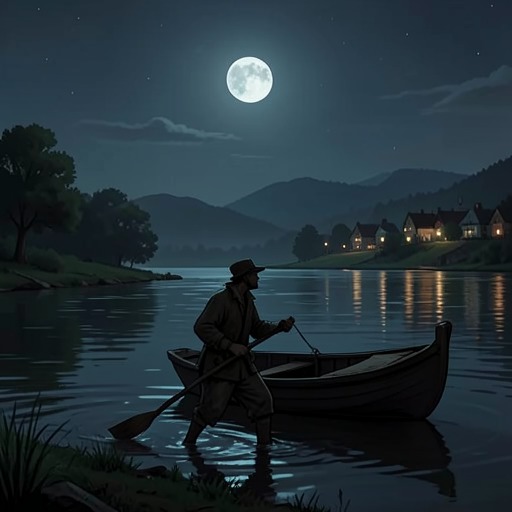
Driss describes reaching Spain by boat without documents or money. In one telling, he says he landed beside a luxury marina and swam ashore; later, he elaborates that he jumped from a ship and came to a small, dirty beach south of the marina at Sotogrande. These accounts differ in detail, and the narrative presents them as parts of a story whose reliability Ismael questions rather than as independently verified events.
In the fuller version, Driss walks from the beach through Sotogrande’s marina and onward toward San Martín. The route passes closed shops, restaurants, and the marina’s outer gates before reaching a road through the dark countryside. His arrival is described as unnoticed: he reaches land and makes his way inland without encountering anyone who stops him. The detail that the traffickers waited until the coast guard had gone reinforces the contingency of the crossing, while Driss’s own response—laughter at how it happened—casts the border crossing as unexpectedly simple.
The landscape also complicates the idea of entering a wholly foreign place. Driss recognizes smells that remind him of Morocco, even as he moves among marinas, fish restaurants, and bars frequented by yacht visitors. Spain is therefore both near and unfamiliar: the coast carries traces of home, but the social world he enters is shaped by wealth and leisure from which he remains excluded.
Shelter and work with the Bloodworths
After reaching the countryside, Driss is taken in by Angela Bloodworth, who leads him into the farmhouse she shares with Roger Bloodworth. He is given food, dry clothes, bedding, and a small room under the rafters in the guest wing. Angela provides a key but tells him not to go out onto the road alone until she has spoken with her husband. The household’s initial welcome combines practical care with a decision to control his movements.
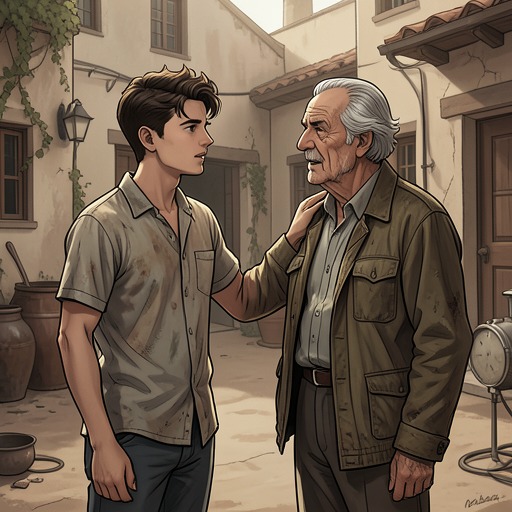
Roger offers Driss work as a gardener, with board and lodging and a monthly wage of three hundred euros. Driss accepts, although he feels misgiving. The arrangement gives him a place to stay and a means of subsistence, but it is not unrestricted security. During the summer, Roger keeps him away from the guests, closing the door of the outbuilding while they are at the pool and ensuring that Driss is not seen until he is dressed for garden work. His straw hat and gardening clothes make him less conspicuous to the visitors.
The Bloodworths also forbid him to leave the property, walk to the gate, or go into San Martín, explaining that local police look for undocumented workers in the farms and greenhouses. Driss works for weeks pruning trees and hedges and tending the grounds. He says he does not hate the couple and that he loves them, but resents what he understands as their pity. His account makes the contradiction central: their generosity protects him from immediate exposure, while their restrictions and their treatment of him as dependent deny him the independence he wants.
Seasonal isolation and the wish to leave
The household’s routines change with the tourist season. During August, Roger brings Driss coffee in the outbuilding while European guests occupy the rooms; Driss sees them descend to the pool but is kept out of their view. Roger teaches him the work of maintaining the gardens and asks him to teach Arabic in return. Their relationship thus includes exchange as well as dependence, though it remains structured by Roger’s control over the property and Driss’s precarious legal position.
When the rains arrive in November and the tourists leave, parts of the house are boarded up and the Bloodworths retreat to the heated ground floor. The gardens become damp, and Driss grows impatient. He begins to think persistently about Paris and asks Roger about roads through the mountains into France. The route is expensive, and the Bloodworths try to dissuade him from his plan. Driss notices that they seem lonely after the summer and want him to stay; their wish for his company does not alter his desire to move on.
Spain’s promise of refuge consequently narrows into a form of suspension. Driss has shelter and work, but cannot freely go into town, and his planned departure depends on finding a way past the police and paying for transport. The seasonal change makes this tension sharper: as the visitors disappear and the household turns inward, his attention shifts from surviving in place to escaping it.
Departure and the story’s uncertainty
In the final part of the account, Driss says he goes down to the road carrying a bag of cash and clothes and returns to the gas station where he began. There he approaches Moroccan families who have recently arrived by ferry and are travelling toward Paris. He offers to pay their fuel in exchange for a ride, and a young family agrees to take him. They tell him that their destination, Marx Dormoy, is in Paris, and he concludes that the journey has been easier than expected.
This ending completes Spain’s role as an interim location: it is the place where Driss crosses into Europe, survives through another household’s assistance, and attempts to arrange onward travel. Yet the account remains filtered through his telling. Ismael wonders whether Driss is inventing or exaggerating parts of his migration story, and Driss is pleased by the effect his narrative has on the younger listener. Spain therefore stands in the story as both a concrete geography of beaches, roads, farms, and a farmhouse, and a space shaped by the unstable boundary between experience and the tale told about it.